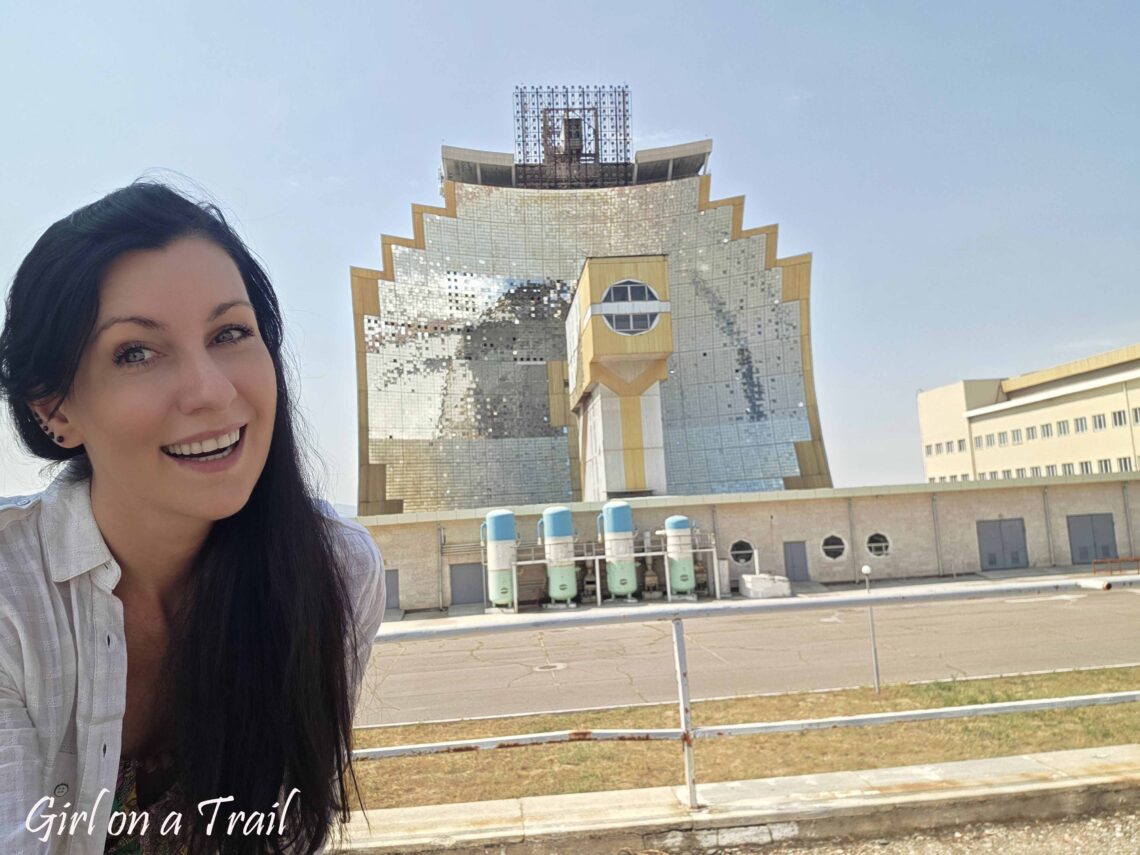
The Institute of the Sun – Soviet science fiction in the mountains of Uzbekistan
The Institute of the Sun, also known as the Big Solar Furnace or the Solar Furnace Complex, is located just 50 kilometres or so from Tashkent, in the unassuming town of Parkent, which at first glance doesn’t really seem to stand out in any particular way. Just an ordinary Uzbek town at the foot of the mountains. And yet, all you have to do is look up at the hill towering above it to see something that definitely doesn’t belong in this landscape.
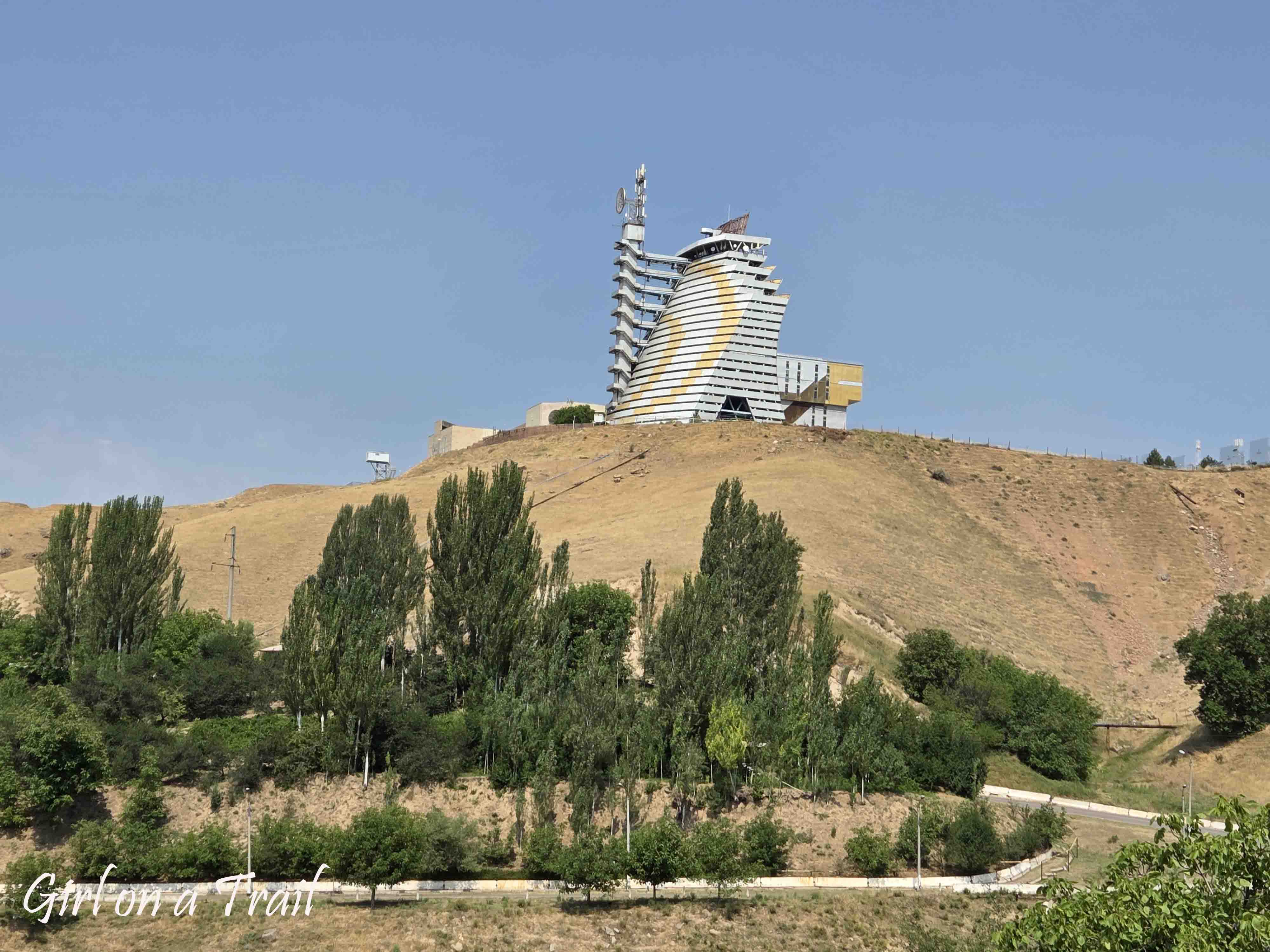
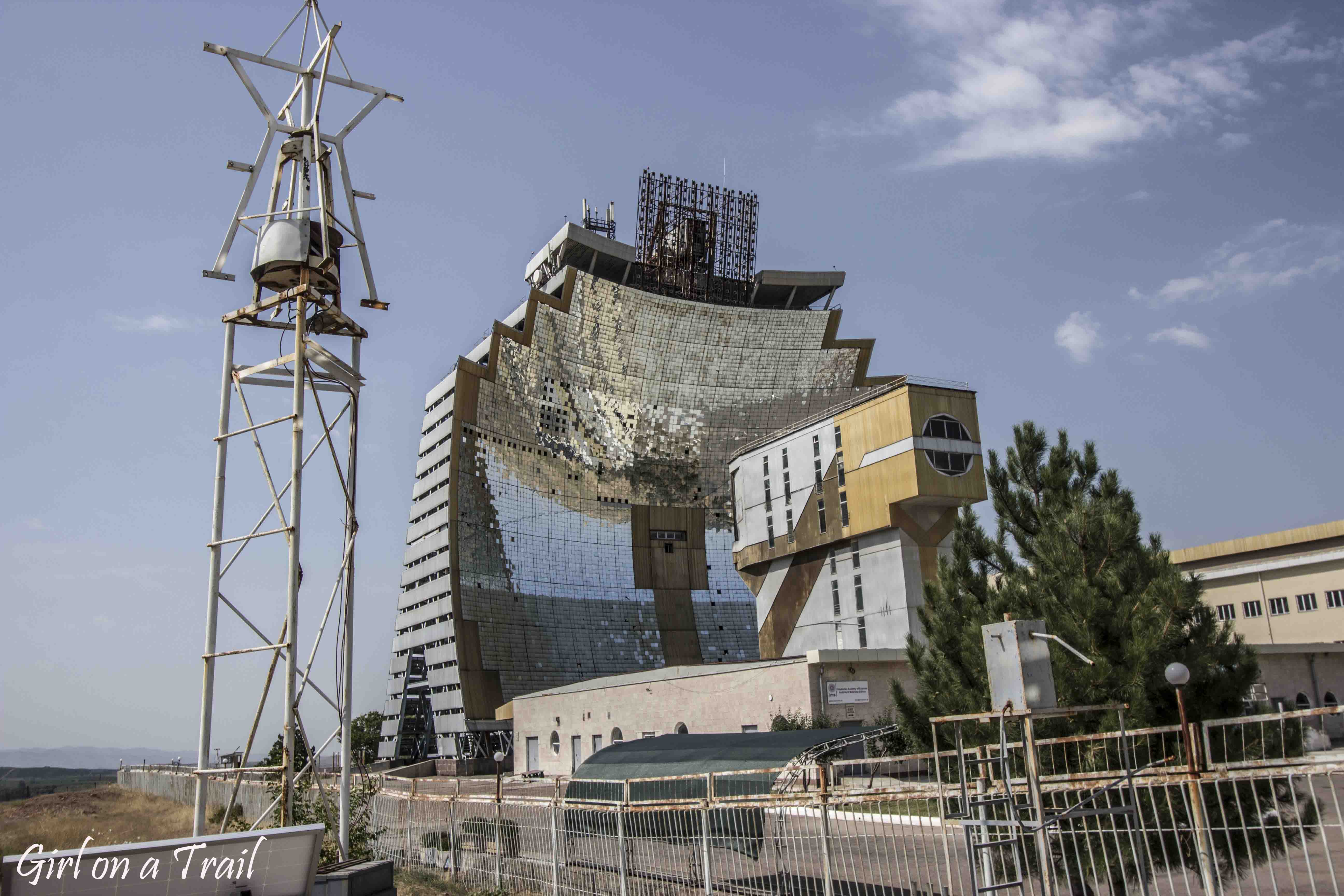
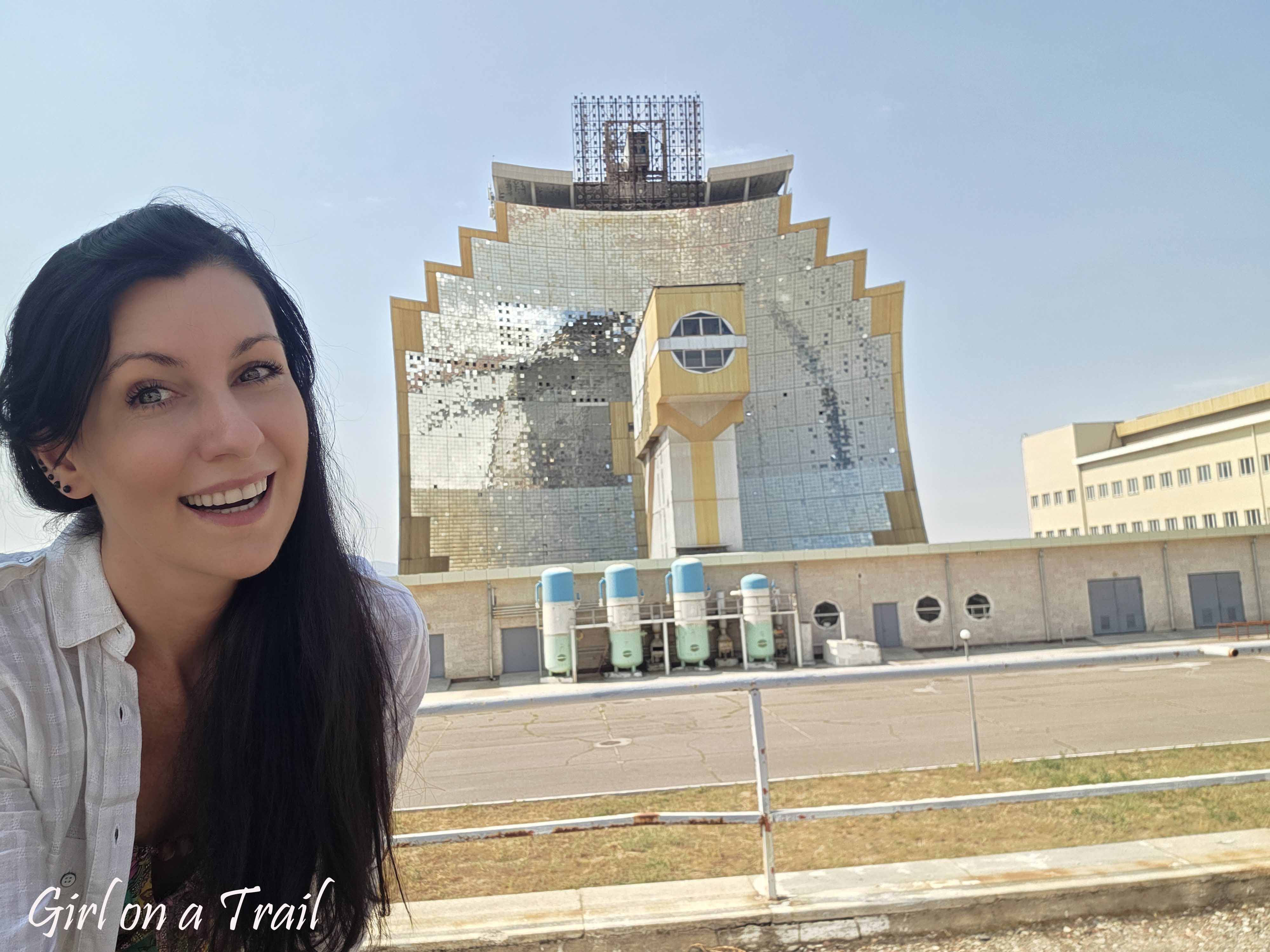
On the mountainside stands a huge, futuristic structure covered in thousands of mirrors, looking like a bizarre cross between an abandoned industrial complex, an urbex site and Soviet science fiction.
And although today you can visit the site and explore the complex, for many years it was shrouded in secrecy. At first glance, you might think its location was simply a coincidence. But there is absolutely nothing accidental about this place.
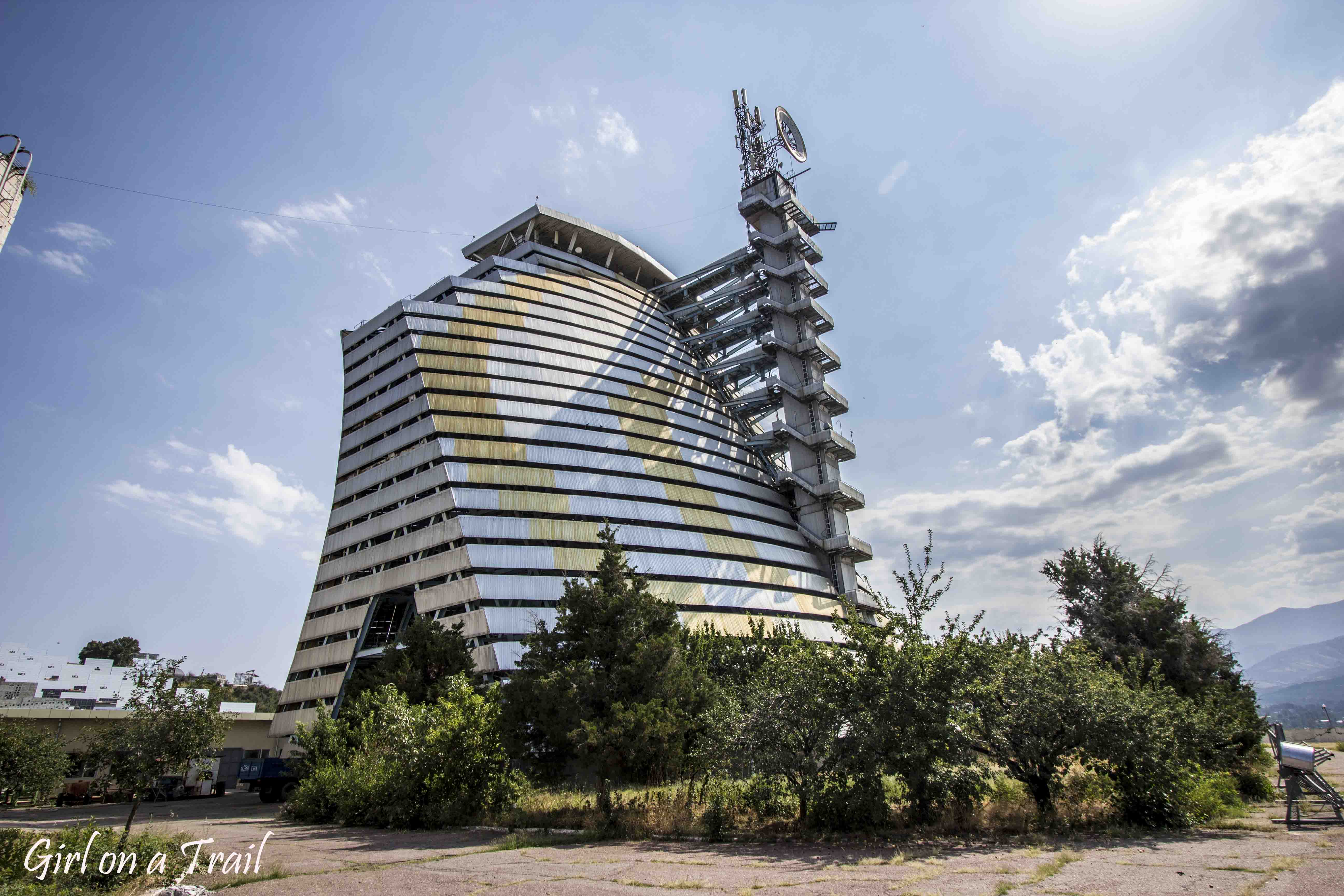
Parkent has exceptionally clear air, a large number of sunny days throughout the year and very little scattering of solar radiation. All of this makes it an ideal location for harnessing solar energy on an industrial and scientific scale. What from a distance looks like a gigantic futuristic fortress is, in fact, one of the most unusual solar laboratories in the world. It was here that the Soviets built one of the largest solar furnaces ever constructed.
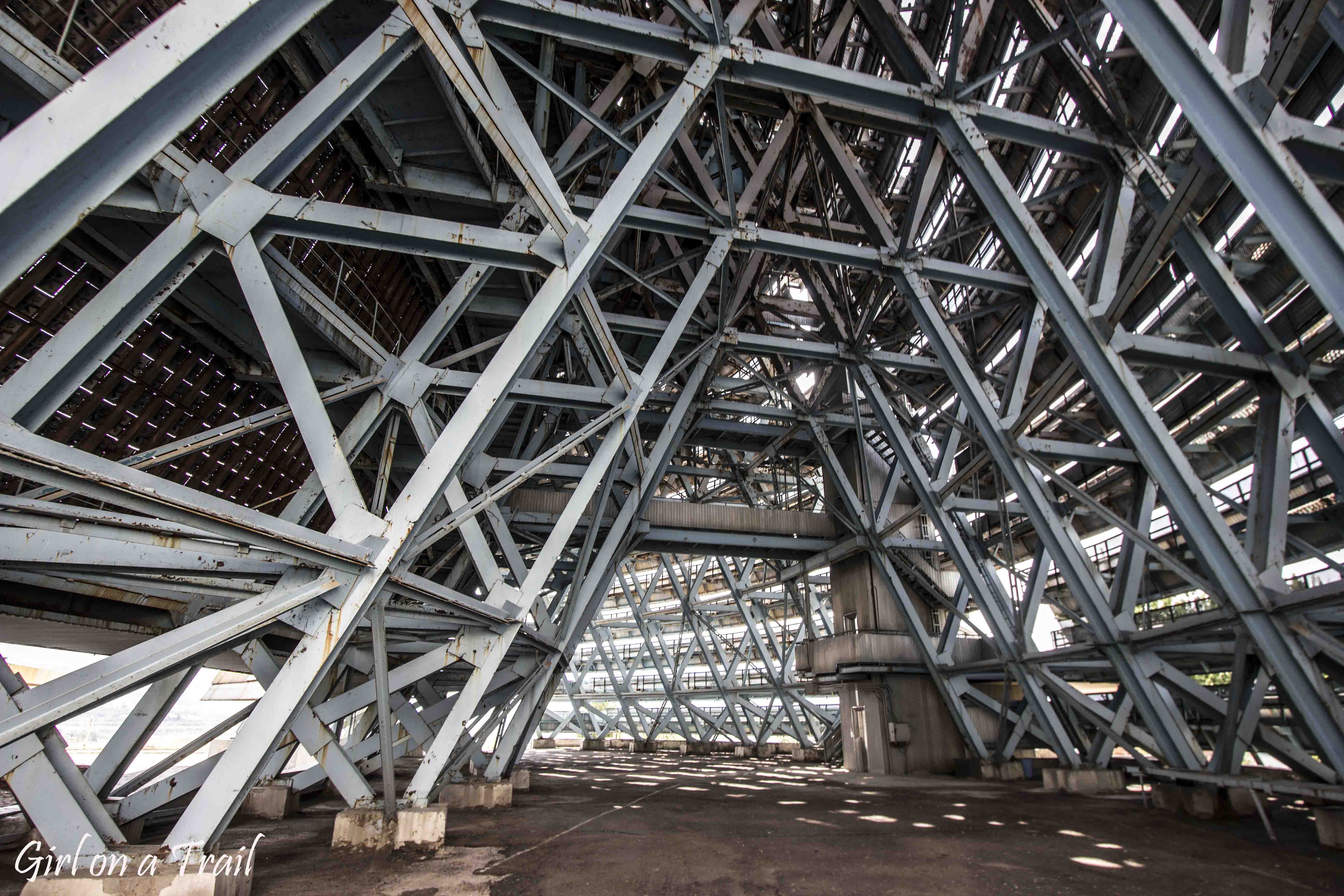
The big solar furnace
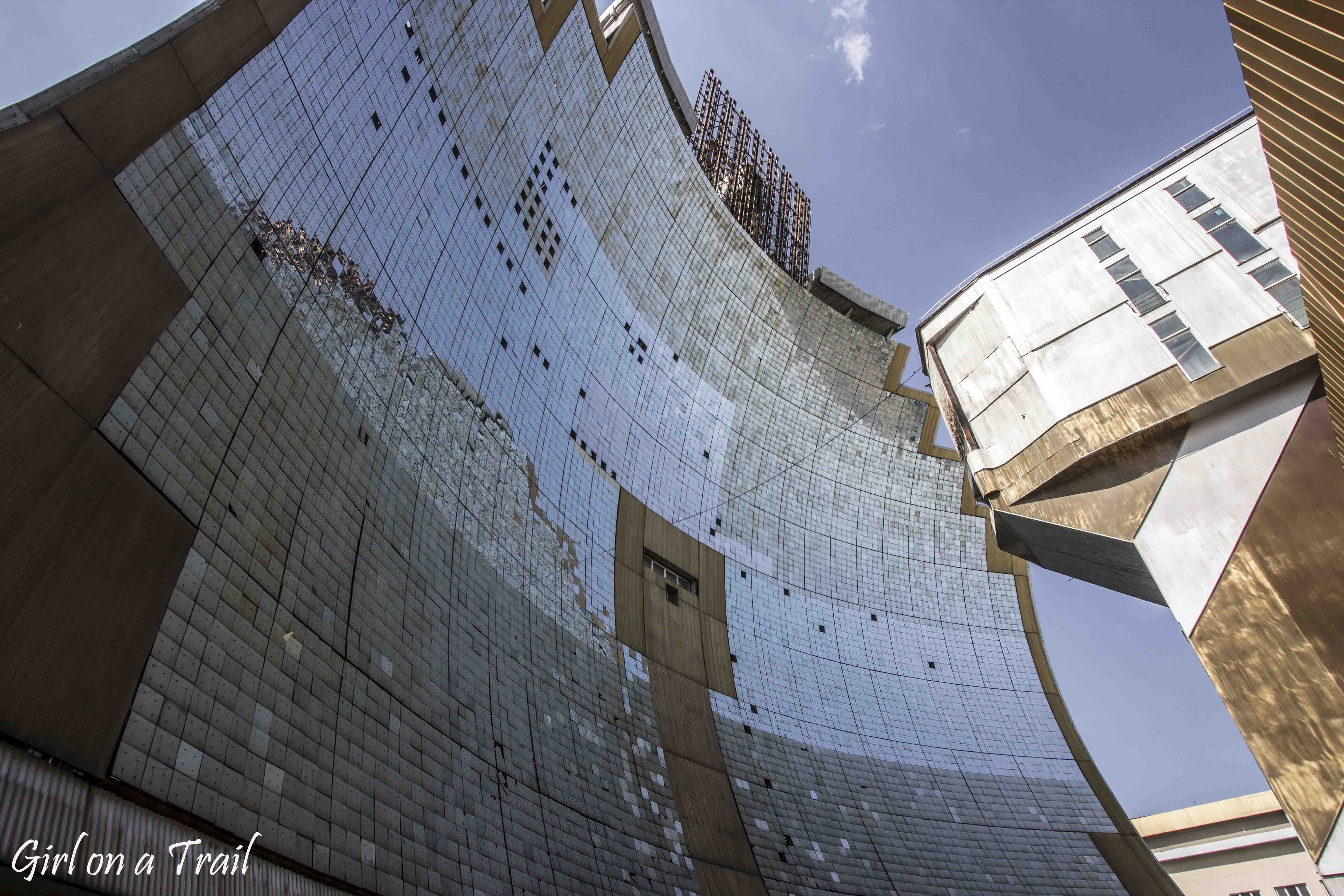
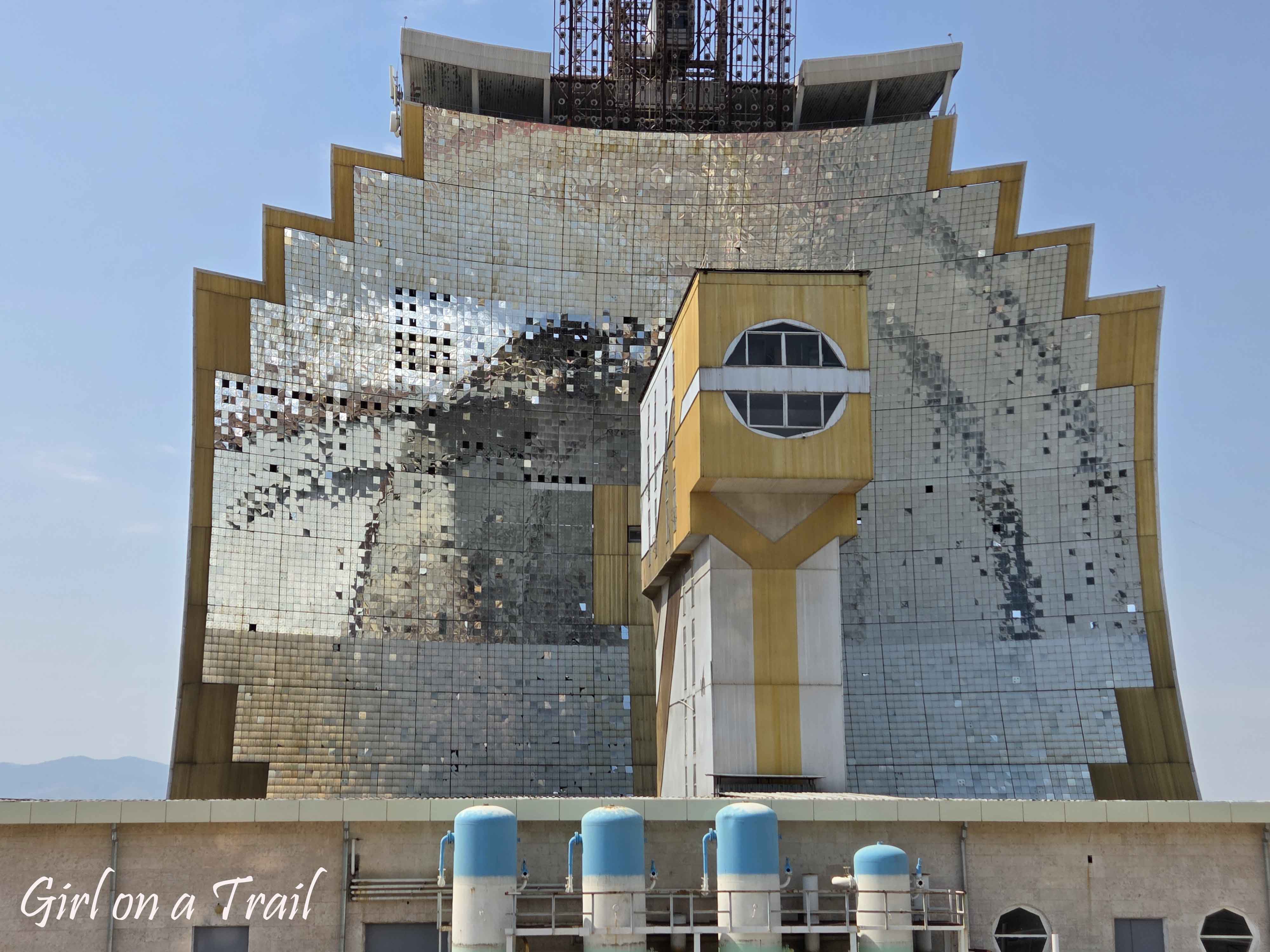
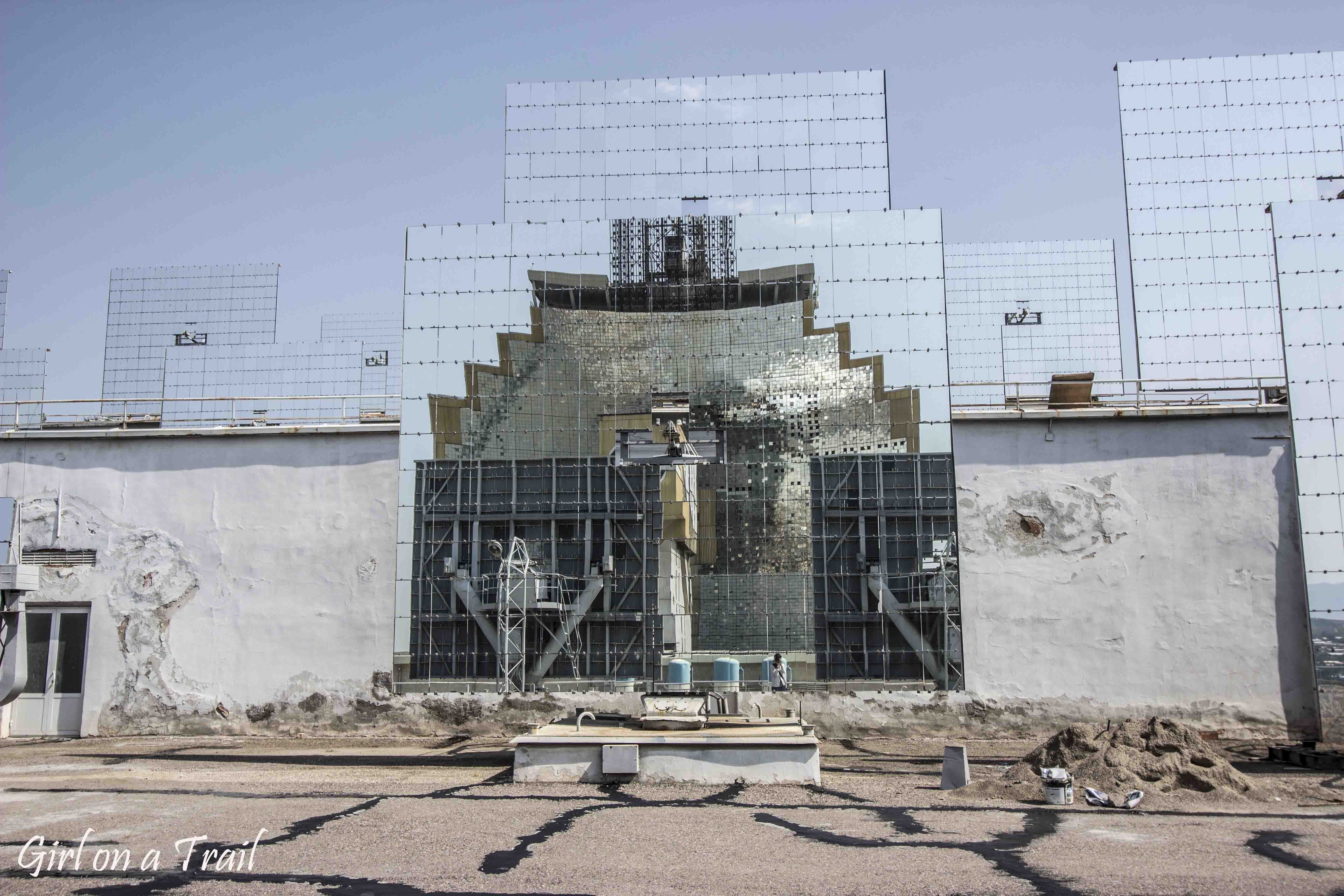
Construction of the complex took six years, beginning in 1981 and being completed in 1987. The entire site consists of several main elements: a field of heliostats, a huge solar energy concentrator, a technological tower and laboratory facilities. And this is where things get really interesting. The thousands of mirrors aren’t here to provide a cool backdrop for Instagram selfies. The heliostats – enormous structures fitted with mirrors and positioned on the mountainside – track the movement of the Sun and direct its rays towards the giant concentrator throughout the day. The entire system uses more than 12,000 mirrors, around 10,700 of which are located on the concentrator itself.
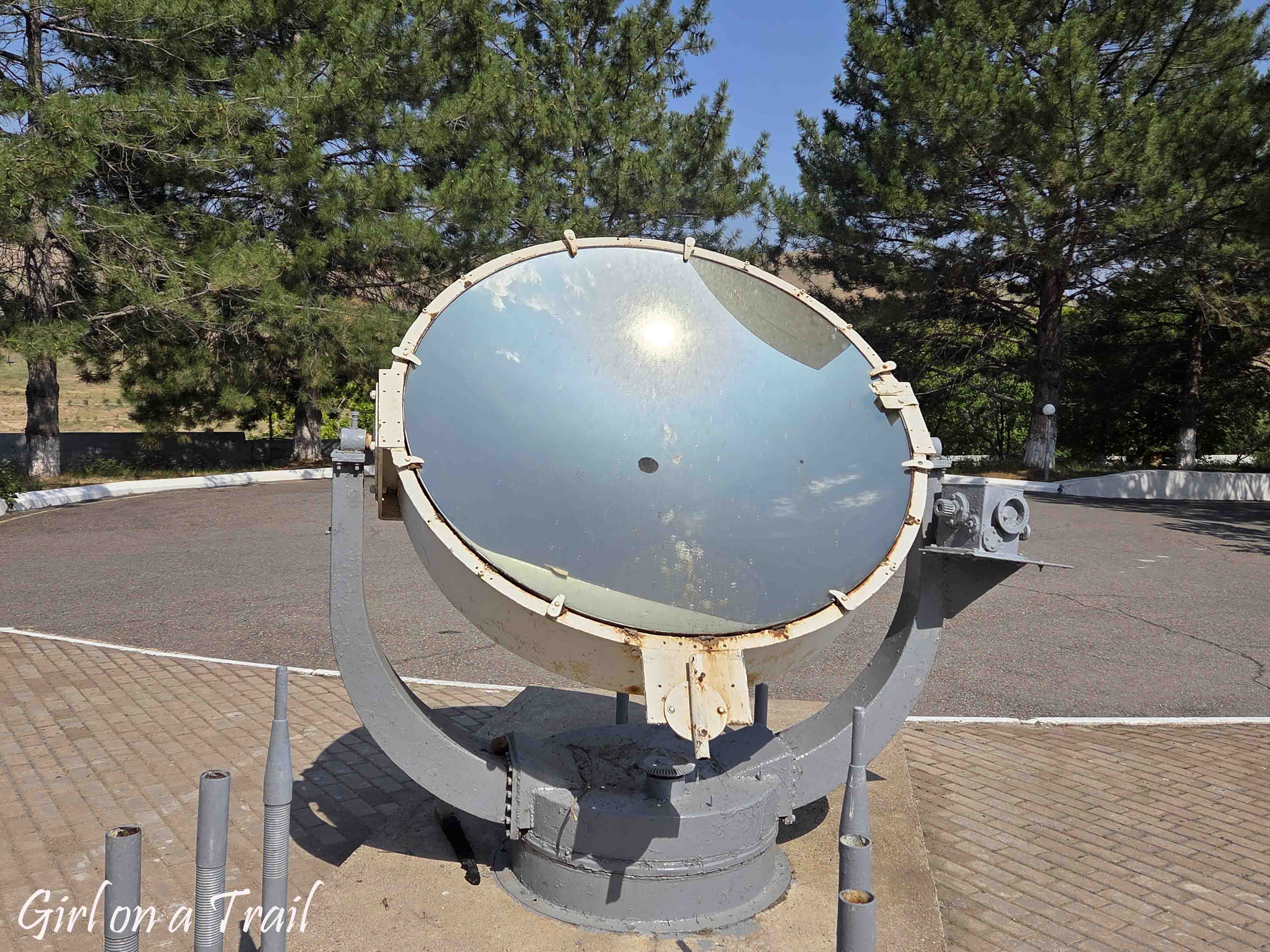
The concentrator focuses the reflected rays onto a single point roughly one metre in diameter. This makes it possible to achieve temperatures of around 3,000°C. In other words, temperatures at which I definitely wouldn’t want to accidentally find myself on the wrong side of that mirror. Such extreme heat makes it possible to melt metals and alloys, as well as conduct experiments to investigate how different materials behave under extreme conditions. The focal area is located inside a special technological tower equipped with instruments that allow scientists to study physical and chemical processes occurring under extremely high temperatures. The concentrated stream of solar energy enters the tower through a special window, and its power can reach around 1 megawatt. It sounds like something straight out of a science-fiction film, but here they really did build a machine that uses thousands of mirrors to focus the energy of the Sun into a single point.
Uzbekistan’s answer to Odeillo
The Institute of the Sun in Parkent is one of just two complexes of this scale in the world. Its counterpart is the famous solar furnace in Odeillo in the French Pyrenees. Both facilities were built around the same period and have a similar design. The French furnace is, however, slightly more powerful and can reach temperatures of up to around 3,500°C. So you could say that Uzbekistan and France each have their own gigantic ‘suns’ – except that instead of shining in the sky, they are used by scientists to conduct research into materials and processes that take place at extreme temperatures.
Soviet secrets and the shadow of the Buran programme
It is hardly surprising that during the Soviet era the complex also had strategic importance. Research was carried out here into materials capable of withstanding extremely high temperatures, which could potentially be used in aviation, space technology and other industries requiring exceptional durability. The member of staff who showed me around told me that materials for the Buran space programme were tested here. This is precisely why the Institute of the Sun is sometimes associated with the Soviet space programme, including the Buran space shuttle programme.
That said, the entire complex fits perfectly into the atmosphere of the Soviet technological race. During the USSR era, materials that had to withstand extreme conditions were tested here, while research into high temperatures could be applied to aviation and space technologies. Some sources also mention the possibility of conducting experiments under conditions simulating extraterrestrial environments, including conditions resembling those found on Mars. So it is hardly surprising that for many years the site was closed and shrouded in secrecy. It was one of those Soviet facilities that the average person probably had absolutely no idea existed.
Visit the Institute of the Sun
Officially, the Solar Furnace Complex is currently undergoing renovation. I tried contacting the Institute through its website to arrange a visit, but unfortunately nobody replied to my message. So I decided to take a chance and simply turn up in person to see whether it was actually possible to get inside. When I arrived at the gate, I discovered that it was locked. I was already beginning to think that the whole expedition would end with me looking at the complex from behind the fence, when suddenly a member of staff appeared. And instead of telling me to go away, he started showing me around the site and telling me about its history. I obviously had some language difficulties, as unfortunately I don’t speak Russian, but somehow we managed to communicate.
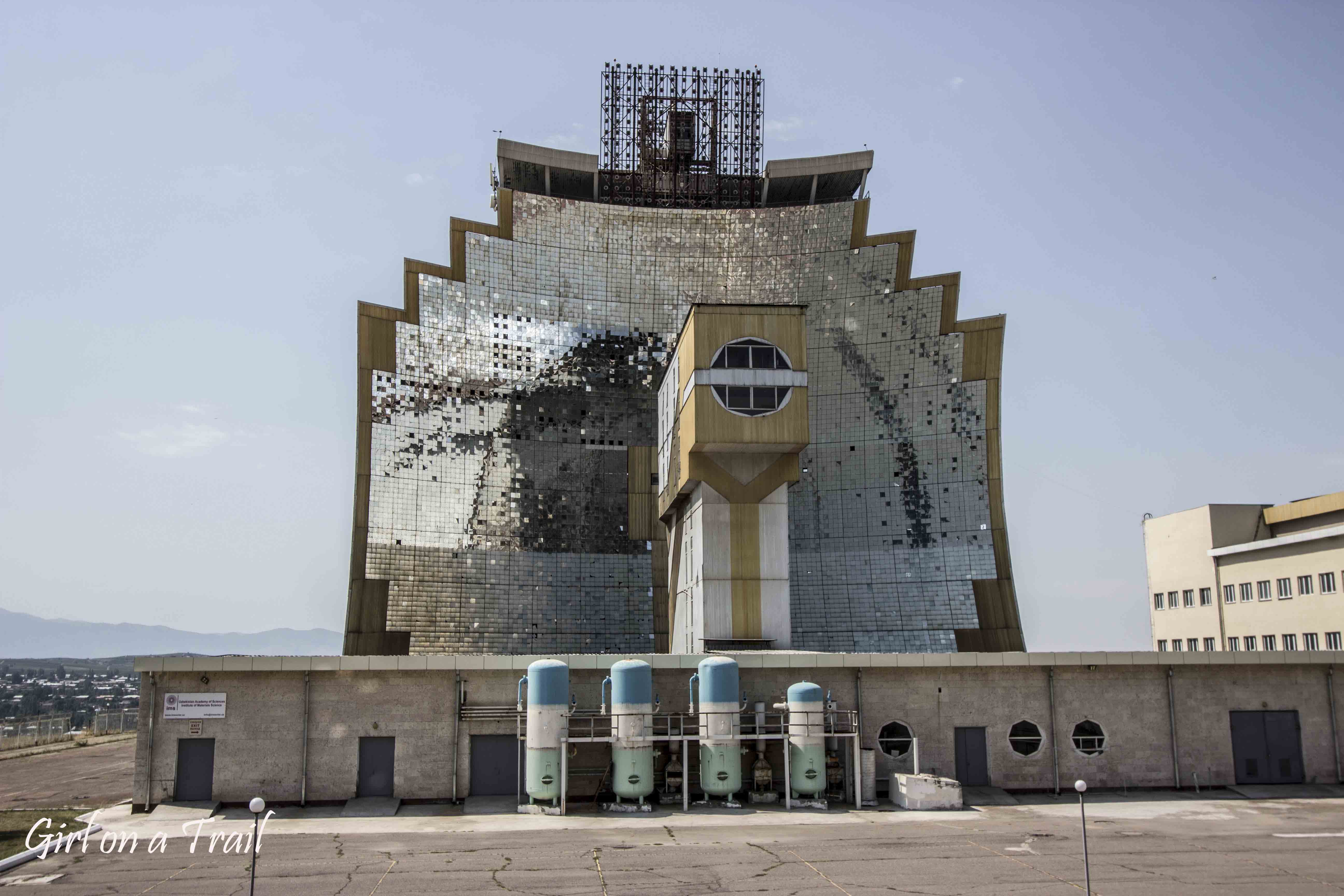
Thanks to that unexpected encounter, I was able to see the complex up close, including the enormous concentrator and its interior. Some time ago, it was also possible to go up to a viewing platform and see the entire field of heliostats from above. At present, this part of the site is probably no longer accessible to visitors, presumably for safety reasons. But even from ground level, the view is genuinely out of this world. Dozens of enormous mirrored structures stand opposite the giant wall of the concentrator. It is hard to believe that you are looking at a facility built during the days of the Soviet Union. Interestingly, the architects paid considerable attention not only to the technology but also to the appearance of the entire complex. Both the interiors and the façades were designed using marble, travertine, metal and glass, while decorative elements were intended to emphasise the futuristic character of the site.
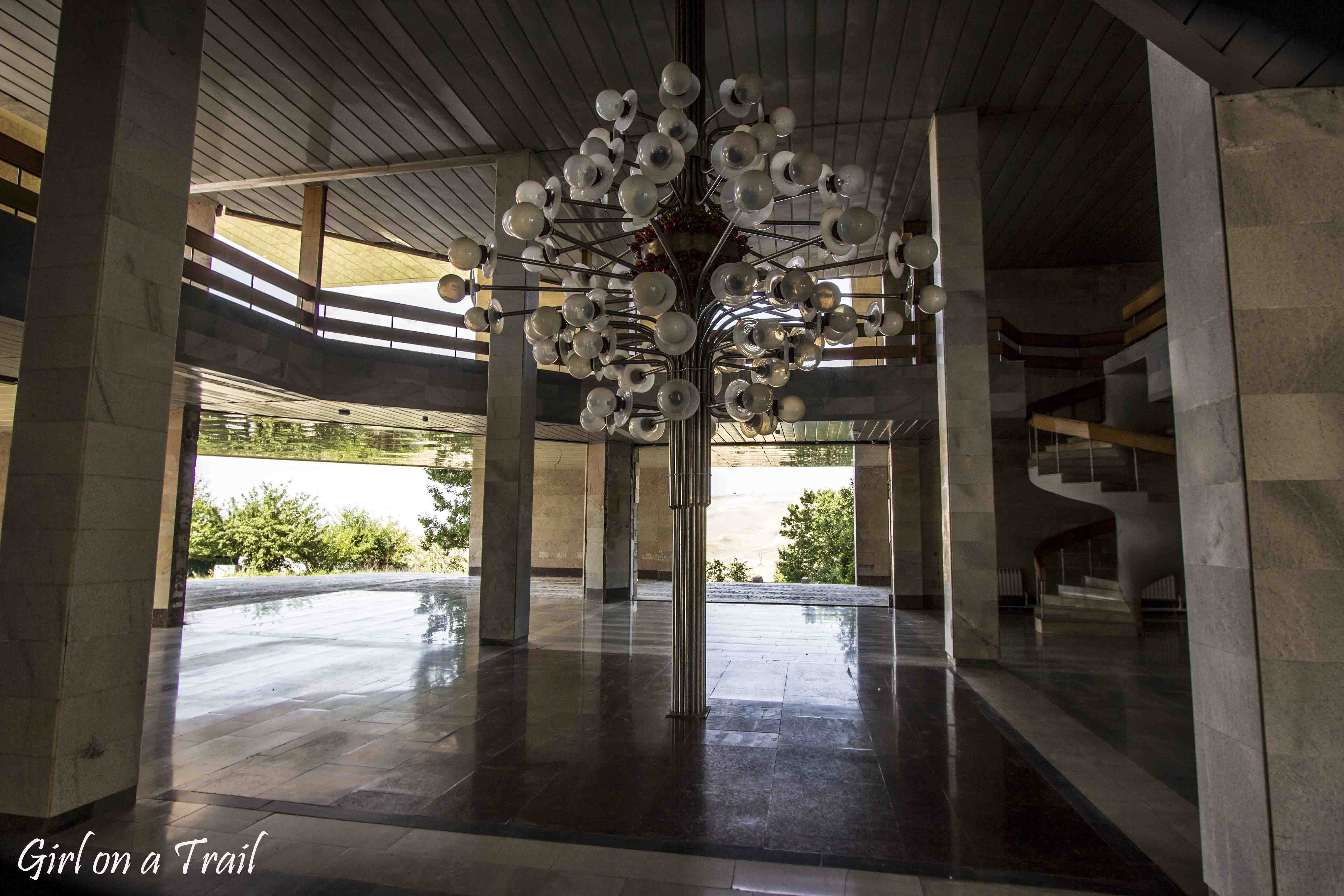
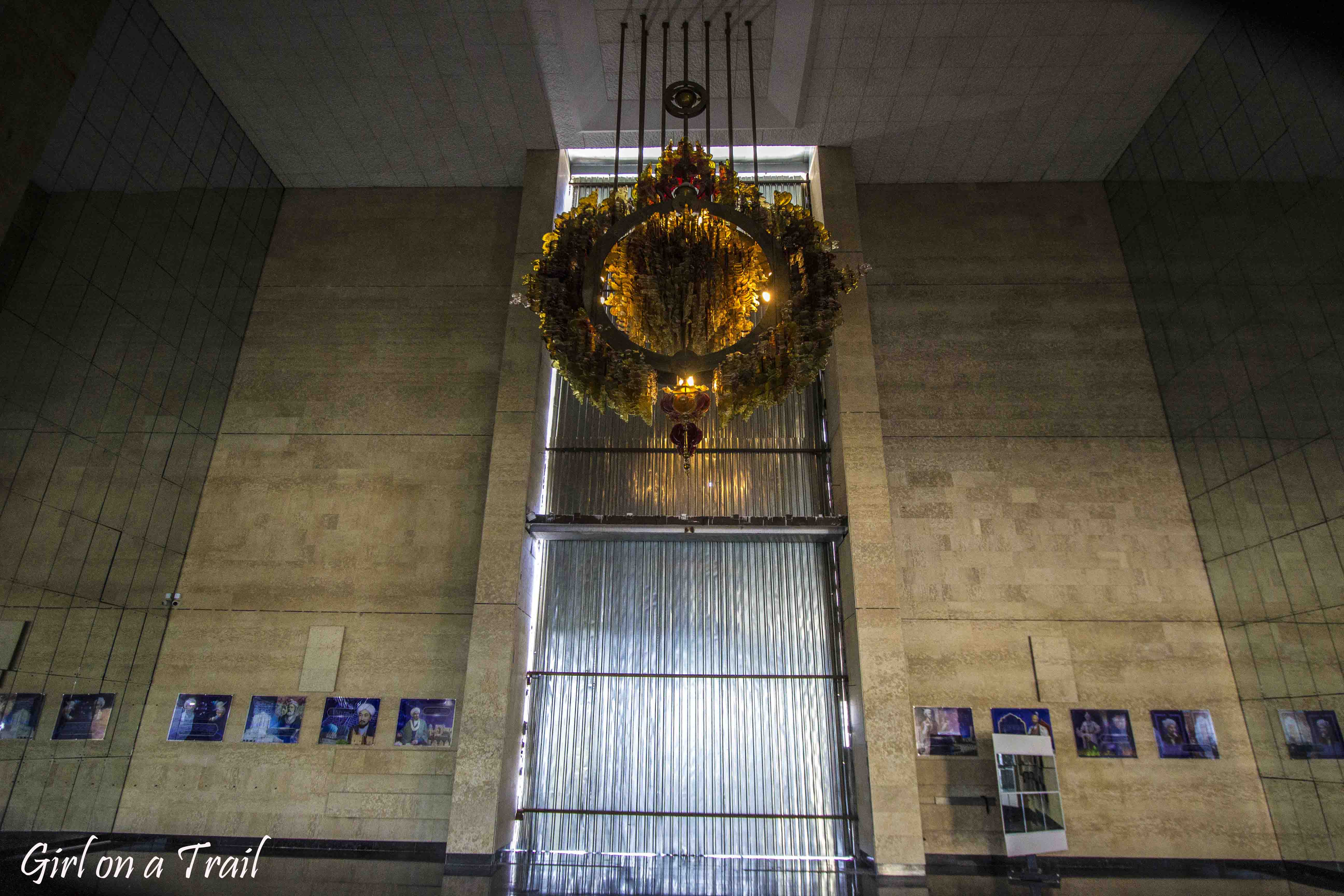
One of the enormous installations resembling the Sun was supposedly made using amber from Kaliningrad. So even Soviet science got its own artistic, space-age setting here. I paid 60,000 Uzbekistani som to visit the Solar Furnace Complex, which is less than £4. And, honestly, it was absolutely worth taking the chance and coming here.
A piece of the Soviet vision of the future
After the collapse of the USSR, the future of the complex became uncertain. Funding for research was severely reduced, but the Institute of the Sun survived. Research is still carried out here today into materials capable of withstanding extreme temperatures, advanced types of ceramics, high-temperature technologies and the use of solar energy. And I think that’s exactly why I like places like this so much. They aren’t perfectly restored. You won’t always find them on the front pages of guidebooks. Sometimes they look slightly surreal and have that distinctive atmosphere of places that were created in a completely different era. And that’s precisely what makes them so fascinating.


You May Also Like

The capital of Russia, less serious side of Moscow

Kuwait – space towers and Operation Desert Tire
