Abu Dhabi – attractions, architecture and local vibe of the UAE
Abu Dhabi, the capital of the largest emirate in the UAE, may not boast a vast array of tourist attractions, but it is undoubtedly worth a visit. At first glance, it’s evident that the city is primarily designed for its residents. While nearby Dubai is dominated by tourists, Abu Dhabi seems to be more overlooked by them. Unlike Dubai, where the economy now heavily relies on new technologies and tourism, Abu Dhabi remains self-sufficient thanks to its oil production, preserving its unique local character.


Traditionally, the city center features numerous skyscrapers. Some of them may be a bit overwhelming in their design, but as they say, there’s no accounting for tastes 😉.

Overall, Abu Dhabi seems like a testing ground for various bold architectural ideas. A great example is the Capital Gate, also known as the Leaning Tower of Abu Dhabi. Standing at 160 meters tall with 35 floors, the building leans 18 degrees -14 degrees more than the Leaning Tower of Pisa. It is the world’s most tilted building, earning it a place in the Guinness World Records. This extreme tilt was made possible by a robust foundation consisting of 490 piles, the largest of which have a diameter of up to one meter and are placed 30 meters underground.

Another fascinating structure is the Aldar HQ, often referred to as the “coin” due to its unique circular shape. The convex effect was achieved by joining diamond-shaped segments. Interestingly, despite its seemingly delicate design, the building must withstand significant wind loads due to its large surface area.

While Abu Dhabi’s downtown may not be as spectacular as Dubai’s, it offers a distinct, more local atmosphere. Modern architecture is seamlessly integrated with historic landmarks.

A perfect example of this blend is Qasr Al Hosn, translated as the Fortified Palace and also known as the White Fort due to its characteristic white color. Built in the 18th century, it is the oldest building in Abu Dhabi. Back then, the site of today’s modern city was just a fishing village, and the fort was constructed to protect trade routes.

The city center also features two parks: Capital Park and Formal Park, located adjacent to each other. Capital Park serves as a primary leisure spot for locals, offering picnic shelters, fountains, playgrounds, and a basketball court.

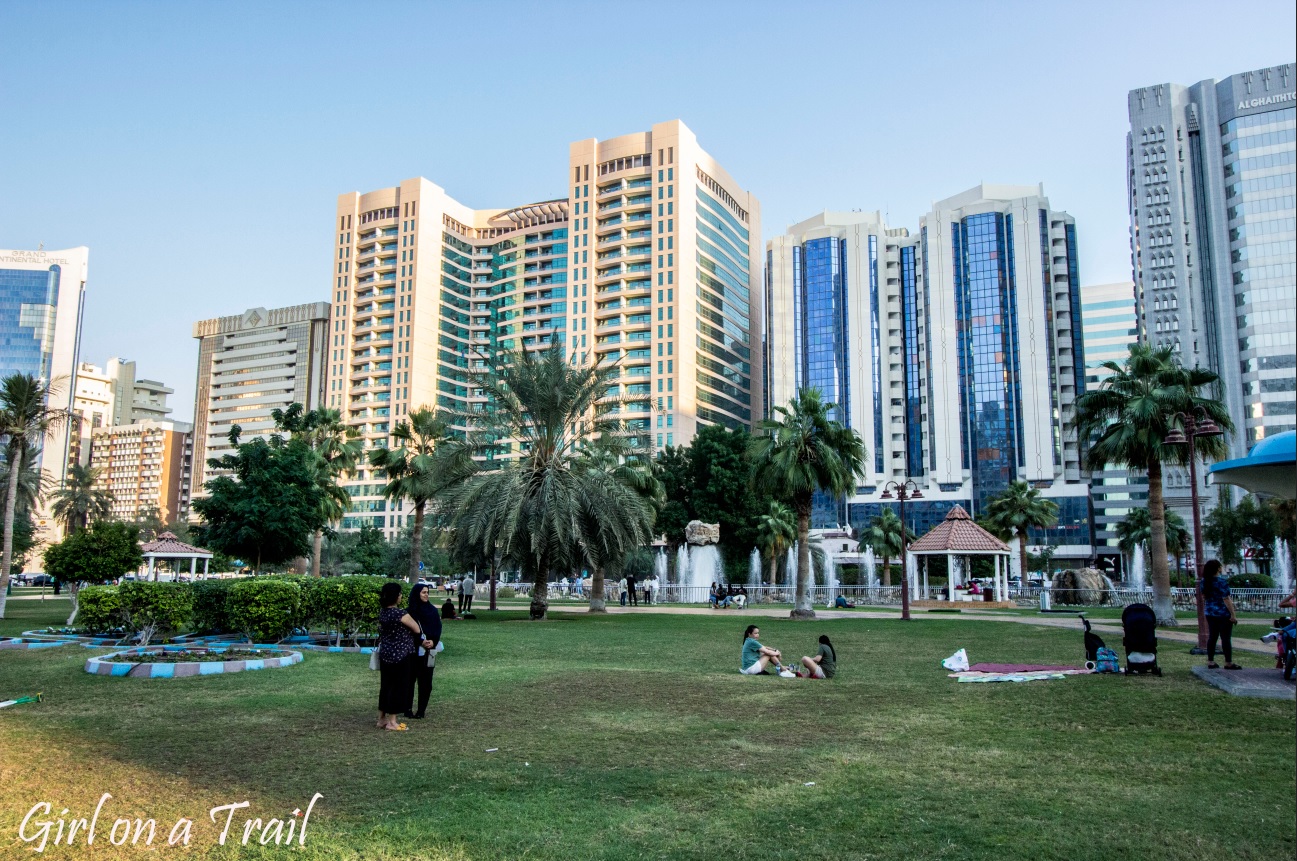
Formal Park, on the other hand, is situated next to the promenade, providing a unique vantage point for observing Abu Dhabi’s skyscrapers.

The promenade itself is a fantastic spot for evening jogging or leisurely walks, especially during sunset, which offers breathtaking views of the city and the beach.


Abu Dhabi can also be admired from a different perspective from the opposite Al Marina.

For a taste of local culture, visiting a date market is a must. Dates have long played a significant role in Middle Eastern culture and are inseparably associated with this region. The market offers around 45 varieties of dates, filling the air with their sweet aroma and covering counters with their abundance.

It’s also a great opportunity to chat with local vendors and sample regional delicacies. After exploring the entire market, it’s almost guaranteed that no one will leave hungry. Alongside dates, the market offers date syrup, chocolates, jams, other dried fruits, and nuts. Visiting in the evening is recommended, as bargaining tends to be more effective then. Nearby, there’s also a fruit and vegetable market where fresh produce can be purchased at reasonable prices.

Abu Dhabi, although often overshadowed by nearby Dubai, has its own unique charm and character that are worth exploring. Alongside its modern architecture, visiting the parks, promenade, or local market allows you to experience the city’s distinctive local atmosphere.


You May Also Like

Vietnamese market

Moscow, museums – places worth visiting